
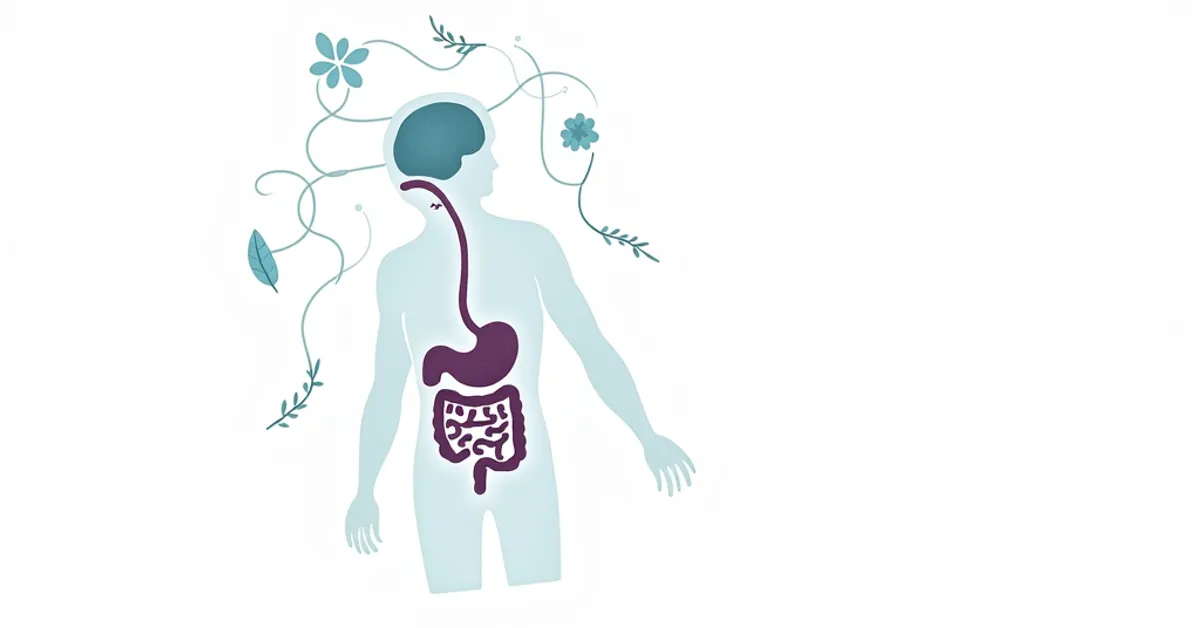
If you have ever noticed your stomach tighten before a big presentation, or felt queasy during a stressful week, you have experienced the gut-brain connection firsthand. That bidirectional communication highway between your digestive tract and your brain is real, well-studied, and increasingly linked to anxiety and mood. What is surprising to many people is that the trillions of bacteria living in your gut may have a meaningful say in how you feel.
Research into psychobiotics (probiotics that may influence mental health) has accelerated rapidly over the past decade. While this is still a maturing field, the evidence is intriguing enough that scientists, clinicians, and everyday people are paying close attention.
What Is the Gut-Brain Axis?
The gut-brain axis is the network of chemical signals, nerves, and immune pathways that connect your gastrointestinal tract to your central nervous system. The vagus nerve is the main communication channel, running from the brainstem all the way down to the abdomen. Roughly 80-90% of the signals on this nerve travel upward, from gut to brain, not the other way around.
Your gut also produces a remarkable share of the body’s neurotransmitters. About 90-95% of the body’s serotonin is synthesized in the gut, along with significant amounts of dopamine precursors and GABA. These chemicals do not simply stay local; they influence how the brain regulates mood, sleep, and stress responses.
The gut microbiome, the vast community of bacteria, fungi, and other microorganisms in your intestines, plays a central role in this signaling. A healthy, diverse microbiome supports the production of short-chain fatty acids and neurotransmitter precursors that keep the gut-brain conversation balanced. Disruptions to that microbial balance (called dysbiosis) have been linked in studies to increased anxiety-like behavior and altered stress responses. For a deeper look at how probiotics fit into this picture, the Me First Living gut-brain axis research overview is a solid read.
What the Research Says About Probiotics and Anxiety
Several well-designed studies now examine whether supplementing with specific probiotic strains can shift anxiety symptoms in a measurable direction.
Clinical Evidence in Humans
A 2019 meta-analysis published in General Psychiatry reviewed randomized controlled trials and found that probiotic interventions were associated with significant reductions in anxiety scores compared to placebo (PMID: 31179435). The researchers noted that the effect was especially pronounced in studies using multi-strain formulas.
A randomized trial from 2021 looking at stressed medical students found that a multi-strain probiotic supplement taken for eight weeks led to lower self-reported stress and anxiety scores, along with measurable reductions in cortisol output (PMID: 34521516). The researchers suggested the mechanism involved both the HPA (hypothalamic-pituitary-adrenal) axis and vagal nerve signaling.
Animal Model Insights
Germ-free mouse studies have been particularly illuminating. Mice raised without any gut bacteria display exaggerated anxiety-like behavior and abnormal stress hormone responses. When these animals are colonized with healthy bacteria, the behavioral changes partially reverse. One landmark paper from 2011 showed that Lactobacillus rhamnosus reduced anxiety-related behavior in mice and modulated GABA receptor expression in the brain, with effects that disappeared when the vagus nerve was cut (PMID: 21876150). That last finding is particularly compelling because it directly implicates the vagus nerve as a key messenger.
Specific Strains Under Study
Not all probiotics are created equal for mood support. The strains with the most research behind them for anxiety and stress include:
- Lactobacillus rhamnosus (JB-1): Associated with reduced anxiety behavior and lower corticosterone in animal studies
- Lactobacillus helveticus R0052 + Bifidobacterium longum R0175: This combination showed reduced psychological distress in a human clinical trial (PMID: 21042943)
- Bifidobacterium longum: Studied for its role in reducing stress-associated gastrointestinal symptoms and cortisol output
- Lactobacillus acidophilus: Supports gut lining integrity, which may reduce inflammatory signals reaching the brain
A quality multi-strain probiotic covering several of these strains gives you broader coverage than single-strain products. Look for something in the 40 billion CFU range for meaningful colonization support, like Probiotic 40 Billion CFU from Me First Living, which includes both Lactobacillus and Bifidobacterium strains.
How Probiotics May Support Mood: The Mechanisms
The connection between gut bacteria and anxiety is not a single pathway. Several overlapping mechanisms appear to be at work:
Serotonin Production
Certain gut bacteria stimulate enterochromaffin cells in the intestinal lining to produce serotonin. While gut serotonin does not cross the blood-brain barrier directly, it influences local nerve signaling that travels up the vagus nerve to the brain, shaping mood-related circuits.
GABA Modulation
GABA is the primary inhibitory neurotransmitter in the brain; low GABA activity is closely associated with anxiety disorders. Some Lactobacillus strains produce GABA directly in the gut, and animal research suggests this gut-derived GABA may influence brain GABA receptor expression through vagal pathways.
Inflammation Reduction
Chronic low-grade inflammation is increasingly recognized as a driver of anxiety and depression. A healthy microbiome reinforces the gut mucosal barrier, reducing the translocation of bacterial lipopolysaccharides (LPS) into the bloodstream. Lower systemic LPS means less neuroinflammation, which may support calmer baseline brain activity.
HPA Axis Regulation
The HPA axis controls the body’s cortisol stress response. Dysbiosis has been linked to a hyperreactive HPA axis, meaning more cortisol in response to smaller stressors. Several probiotic intervention studies have shown measurable reductions in cortisol output, suggesting the microbiome helps calibrate how strongly the body reacts to perceived threats.
Probiotics vs. Anxiety Medication: Important Context
Probiotics are not a substitute for clinical treatment of anxiety disorders. If you are dealing with significant anxiety that interferes with daily life, working with a licensed mental health professional and discussing medication options with your doctor is the right starting point.
Where probiotics may fit is in the broader lifestyle picture: supporting gut health as one component of a stress management strategy that also includes sleep, exercise, diet, and stress reduction practices. Many people notice that when their gut health improves (less bloating, more regular digestion, better sleep), their general anxiety baseline softens. Whether that is due to specific neurotransmitter effects or simply feeling physically better is difficult to fully separate, but both matter.
For context on how probiotics affect gut health more broadly, see our deep-dive on probiotics for gut health. And if you are new to the gut-brain mood connection, our article on the gut-brain axis and mood covers the foundational science in detail.
Choosing a Probiotic for Gut-Brain Support
If you want to use probiotics as part of a gut-brain wellness routine, here are the key things to look for:
- Multiple strains: Look for a formula that includes at least one Lactobacillus and one Bifidobacterium species
- Sufficient CFU count: Research on mood effects typically uses 10-50 billion CFU; doses under 5 billion are unlikely to have meaningful systemic effects
- Delayed-release or enteric-coated capsules: These protect bacteria from stomach acid, improving survival to the intestines
- Transparent labeling: Each strain should be named at the species level (not just “probiotic blend”)
- Consistency: The studies showing mood benefits ran for 4-8 weeks minimum; daily use over time matters more than occasional high doses
What to Expect When You Start
Most people do not feel dramatically different in the first week. The gut microbiome shifts gradually, and mood-related effects, if they occur, tend to show up after 3-6 weeks of consistent use. Some people notice improved digestion and sleep quality first, with mood effects following as a secondary benefit.
A small number of people experience temporary bloating or gas when starting a new probiotic, especially higher-CFU formulas. Starting with a lower dose for the first week and building up can help minimize this. Taking your probiotic with food also tends to improve tolerability and survival of the bacteria through the upper digestive tract.
The research on probiotics and anxiety is genuinely exciting, even if it is not at the point where any specific product can be recommended as a mental health treatment. What the science clearly supports is that a well-functioning gut microbiome is part of a healthy, well-regulated nervous system, and that supporting that microbiome with quality probiotics is a reasonable, low-risk strategy for anyone interested in whole-body wellness.